


CIBIL Score for SBI Home Loan

Loading your search...
A good CIBIL score is essential for availing a home loan from SBI. Your CIBIL score depicts your creditworthiness. By checking your score, the bank ensures that you are a responsible borrower, who maintains timely payment schedules. A good CIBIL score helps you negotiate loan terms and conditions better. Read on to learn more about the benefits of maintaining a good CIBIL score.

Various factors such as the amount of loan and the loan duration are considered by SBI for determining the interest rates. The applicant's CIBIL score is also one of the important factors considered by SBI.
The borrower's CIBIL score is crucial for loan approval, reflecting their creditworthiness and repayment capability. Maintaining a good credit score expedites approval and signifies responsible borrowing, reducing the risk of default for the bank.
SBI evaluates the borrower's comprehensive CIBIL credit report, considering factors like past loan performance and credit card history. While there isn't a strict minimum CIBIL score requirement, having a score of at least 700, ideally closer to 900, enhances the likelihood of approval.
State Bank of India's home loans enable individuals to realize their homeownership dreams, offering competitive interest rates influenced by factors such as loan amount, tenure, and the applicant's CIBIL Score. A robust CIBIL score not only facilitates hassle-free loan approvals but also positions the borrower as a creditworthy individual in SBI's assessment process, benefiting both parties involved.
What is a CIBIL Score and How Does it Impact on SBI Home Loan?
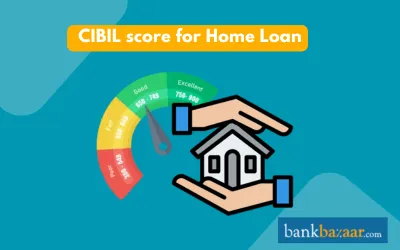
Credit Information Bureau Limited (CIBIL) is an Indian credit information company that records an individual’s credit history pertaining to loans and credit cards.
A CIBIL score is a 3-digit number that ranges from 300 to 900, reflecting a person’s credit behaviour, repayment capacity, and overall financial discipline. When applying for an SBI Home Loan, the CIBIL score is of utmost importance because it will allow the bank to assess the borrower’s creditworthiness and repayment ability.
Given below are the range of CIBIL score and what each range implies.
Range | Category | Implication |
<300 | Nil | Never taken a loan/ No credit history |
300 - 600 | Poor | Damaged credit history/ Can be improved |
601 - 700 | Average | Credit history needs improvement |
701 - 760 | Good | Increase creditworthines |
761 - 800 | Very Good | Good creditworthiness |
801 - 900 | Excellent | Superb credit record/ Best offers available |
The higher the CIBIL score, the quicker the approval may be, access to competitive interest rates, and, most importantly, demonstrates to SBI that you are a responsible financial decision maker.
Benefits of having a good CIBIL score for SBI Home Loan
The benefits of having a good CIBIL score for getting a Home Loan from SBI are as follows:
- Quick approval: A good CIBIL score leads to quicker approval of your SBI home loan application.
- Best interest rates: Enjoy more favourable terms, such as lower interest rates, with a good credit score.
- Variety of options: SBI may offer you a variety of home loan options with attractive terms if you have a good CIBIL score.
- Space for negotiation: A strong credit score gives you leverage to negotiate better home loan offers with SBI.
- Enhanced relationships: Maintaining a good credit history fosters a positive relationship between you and SBI, potentially leading to enhanced loan benefits over time.
Factors affecting CIBIL score
A lot of factors come into play while deciding a CIBIL score. Listed below are some of the factors that affect credit score.
- Unresolved Errors: Inaccuracies in your CIBIL report can impact your score negatively.
- Payment History: Delayed or missed loan EMIs or credit card payments can lower your score.
- Minimum Payments: Making only the minimum payment on credit card dues may indicate financial strain and affect your score.
- Credit Applications: Applying for multiple credit products within a short period can suggest financial instability and lower your score.
- Credit History Length: A longer credit history with timely repayments tends to reflect positively on your score.
- Outstanding Debt: High levels of outstanding debt relative to your income can negatively affect your score.
- Credit Utilization Ratio: The proportion of your credit limit that you're currently using can impact your score; lower utilization is generally better.
- Type of Credit: A diverse mix of credit types, such as credit cards, loans, and mortgages, can positively influence your score.
Minimum CIBIL Score for Home Loan
It is important to understand what are the chances of approval for the SBI home loan so that it will help set realistic expectations. SBI evaluates both primary and co-applicants' credit scores and reports before approving home loan applications, SBI follows RBI guidelines, using credit scores to set interest rates, potentially offering better terms for those with high scores. In the event of default, the responsibility lies with both the primary and co-applicants, impacting their credit scores equally. Therefore, it is essential for both applicants to meet eligibility criteria.
A higher CIBIL score enhances chances of approval as it indicates a reliable repayment history and financial responsibility. A low CIBIL score negatively impacts the chances, efforts to improve it can increase chances of success. Maintaining a good CIBIL score is vital for a smoother home loan application process. While a score of 750 or above is considered excellent, it is typically sufficient to qualify. However, a higher score can lead to lower interest rates on the loan.
CIBIL Score | SBI Home Loan Eligibility |
Less than 650 | Not eligible |
650 - 699 | Eligible with conditions |
700 - 749 | Good chances of approval |
50 + | Best interest rates |
How does SBI Evaluate Borrower’s Creditworthiness using Credit Score?
SBI checks your CIBIL score before approving your loan as the CIBIL score is an indicator of how responsible you are with payments and whether you will repay the home loan on time. If you are thinking of applying for an SBI Home Loan, one of the most important parameters that the bank uses to assess your application is your CIBIL score.
A High CIBIL Score: Get Better Home Loan Offers
A high CIBIL score (generally above 750) indicates that you have maintained good financial behaviour. For SBI, it indicates a low-risk borrower. Consequently, people with a good CIBIL score are more likely to receive:
- Quick approval of their home loan application
- Lower interest rates on their loan
- Flexible repayment terms with better EMI offers
- Variety of home loan options
- Space for negotiating terms with the bank
A high CIBIL score not only enhances your chances of home loan approval but can also help you save a considerable interest in cost throughout the loan term.
Low CIBIL Score: Implications for Home Loan Rejection
A low or declining CIBIL score typically means that you have managed your finances poorly, and SBI may view you as an above-average risk of borrowing. As a result, the bank may:
- Deny you a home loan
- Offer you a home loan at higher interest rates
- Set tougher repayment conditions
Be aware that just because you have a low CIBIL score does not mean that you will default on your EMI payments. Similarly, just because you have a high CIBIL score does not ensure you will make payments perfectly. CIBIL scores really only allow SBI to distinguish between low and high-risk borrowers when it comes to home loan lending.
How to Boost Your CIBIL Score Before Applying for SBI Home Loan
When applying for an SBI Home Loan, having a CIBIL score above 760 will help increase your chances of approval and lower the interest rate you are offered. If your score is below 760, you will want to improve your creditworthiness prior to applying for a loan. Here are some ways to improve your score:
- Make All Credit Card Payments and EMIs on Time
You can significantly improve your credit score by ensuring timely payments. Missing your annual credit card bills, personal loans, and other EMI payments can significantly hurt your score. You can make sure you never miss a single payment by setting up reminders or automating your bill payments.
- Pay Down Existing Debt
Having a lot of debt increases your credit utilization ratio. Paying down your existing loans and credit card bills will help lower the level of debt you currently owe by showing the bank your trustworthy ability to pay the loan monthly.
- Don't Apply for More than One Loan or Credit Card at a Time
When a creditor pulls off your credit, it is considered a hard inquiry, which can lower your CIBIL score. Consistently applying for credit in a short amount of time will lower your CIBIL score. Therefore, only apply for credit when essential, particularly in months leading up to applying for a home loan.
- Check Your Credit Report for Errors
Incorrect information lowers your credit score. It is important that you regularly review and check your CIBIL report for any incorrect or old information. In case of any conflicting information, you must report it and get the defect corrected.
- Maintain a Good Credit Mix
Having a mix of secured loans (like a car or house loan) and unsecured credits (like credit cards or personal loans) can be beneficial for your CIBIL score. Don't only utilize credit cards or unsecured loans, and display evidence of a responsible payment history of different credits.
- Stay Committed and Consistent
Improving your CIBIL score requires patience, consistency and discipline. It takes time and does not happen overnight.
If you follow these steps fastidiously, it will take time, but eventually your score will increase to above 760 which could qualify you for an SBI Home Loan.
Home Loans offered by State Bank of India
State Bank of India is an Indian public sector bank and financial service company. It has a 23% market share in loans and deposits among Indian commercial banks. SBI offers a range of personal loans, home loans, auto loans and other kind of loans.
SBI offers home loans at attractive interest rates. It has different home loan plans to suit the needs of its customers. Listed below are the home loan plans offered by SBI.
Home Loan Plan | Interest Rate |
SBI Regular Home Loan (TL) | 7.25% - 8.45% |
SBI Home Loan Maxgain (OD) | 7.50% - 8.70% |
SBI TOPUP Loan | 7.75% - 10.50% |
SBI TOPUP Home Loan (OD) | 8.00% - 9.20% |
Loan Against Property (P-LAP) | 8.95% - 10.50% |
Reverse Mortgage Home Loan (RML) | 10.30% |
YONO Insta Home Top Up Loan | 8.10% |
Note: All home loans are subject to an External benchmark rate of 7.9%.
Documents required for SBI home loan
- Loan Application: Properly filled out loan application form with three passport-size photos attached
For KYC compliant Savings Bank Account
- Address Proof (if there are any changes in address)
For KYC non - compliant Savings Bank Account
- Proof of identity
- Proof of residence
- 3 passport size photographs
For guarantor
- Proof of identity
- Proof of residence
- 3 passport size photographs
- Personal assets and liabilities statement
- Proof of business address as above
- Signature identification
For salaries individuals
- Original salary certificate from employer
- TDS certificate on Form 16
Documents required for SBI home loan
- Proof of identity
- 3 passport size photographs
- Driving Licence
- Proof of residence
- Bank account statement
- Completed loan application
- Property tax receipt
- Personal Assets statement
- IT PAN card
- Original salary certificate from employer
- TDS certificate on Form 16
- Application for a Loan for an Employer Identity Card: properly filled out loan application form with three passport-size photos attached
Property Documents
- Construction authorisation (where applicable)
- Allocation letter, stamped agreement for sale, registered agreement for sale (only for Maharashtra)
- Ownership Certificate (in case of ready to move property)
- Photocopy of the property tax receipt, approved plan copy, registered development agreement of the builder, share certificate (only for Maharashtra),
- Maintenance bill, electricity bill, conveyance deed (For New Property)
- Receipts for payments made to the builder or seller or a bank account statement
Disclaimer
Display of any trademarks, tradenames, logos and other subject matters of intellectual property belong to their respective intellectual property owners. Display of such IP along with the related product information does not imply BankBazaar's partnership with the owner of the Intellectual Property or issuer/manufacturer of such products.
Read More on CIBIL
Know More About CIBIL
TransUnion CIBIL is one of the leading credit information companies in India. The company maintains one of the largest collections of consumer credit information in the world. CIBIL Score plays a key role in the lives of consumers. Banks and other lenders check the CIBIL Score of the applicants before approving their loan or credit card application. Consumers can visit the official website of CIBIL to check their CIBIL Score and Report. CHECK YOUR CIBIL SCORE now.


FAQs on CIBIL Score For SBI Home Loan
1.How does my CIBIL score impact SBI Home Loan interest rates?
Having a higher score suggests that you are a low credit risk which allows SBI to offer you more competitive interest rates, however if you have a lower score, you may either be offered a higher interest rate, or limited loan options.
2.Can I obtain an SBI Home Loan with a low CIBIL score?
Yes. It is entirely possible; however, the bank may decline your application, offer you a lower loan amount, or provide you with stricter terms like a higher interest rate. Raising your score will increase your chances of getting approved for a loan.
3.How do I view my CIBIL score before applying for an SBI Home Loan?
You can view your score online using CIBIL or other authorized credit bureaus. Viewing your score will help you recognize any mistakes and will help you strengthen your loan application.
4.How can I improve my CIBIL score prior to applying for SBI Home Loan?
To improve your score, you should: pay all EMIs on time or credit card bills, decrease outstanding debt, do not apply for too many loans, make sure that an error on your credit report was rectified.
5.How much time is required to bettering a CIBIL score before loan application process?
Generally, improving a score may take 3–6 months of systematic repayment activities and positive credit habits.
6.Does my CIBIL score have an affect on the loan amount, duration, or EMI?
In an indirect manner, yes. A higher score leads to lower interest rates, lower EMIs, and eligibility for higher loan amounts.
7.How far in advance should I check my CIBIL score before beginning the application process?
Check at least 1 to 2 months ahead of time; it will give you plenty of time to fix any errors, if present, and to act to improve your score if needed.
8.Does a high CIBIL score guarantee that I will receive an SBI Home Loan?
A high CIBIL score will score you a better chance of having your application approved, however it does not guarantee that it will be approved. In addition to the score, SBI will look at your: income stability, employment, property, and debts.
9.What is the effect of delayed or missed payments on the CIBIL™ score?
Delayed payment or missed payment drops your CIBIL score, which further reduces your creditworthiness. Such a situation may result in rejection of home loans by the lenders and reduction of credit limit of your credit card as well.
CIBIL Score Requirements for Loans

Disclaimer
Credit Card:
Credit Score:
Personal Loan:
Home Loan:
Fixed Deposit:


Copyright © 2026 BankBazaar.com.